At 3 A.M., Who’s Watching the Factory?
It’s 3 a.m. Everyone’s gone home, but the machines never stopped. A semiconductor line has to run around the clock, and even a few minutes of downtime can cost a fortune.
So who’s keeping an eye on all that equipment at this hour?
It used to be the night-shift worker. Increasingly, it’s AI. Today, let’s break down the hottest buzzword on the factory floor right now — AI-driven equipment operation — and why everyone’s paying attention.
“We Already Have Automation — What’s the Difference?”
This is where a lot of people get tripped up. “We already run automated equipment, don’t we?”
Think of it like a kitchen.
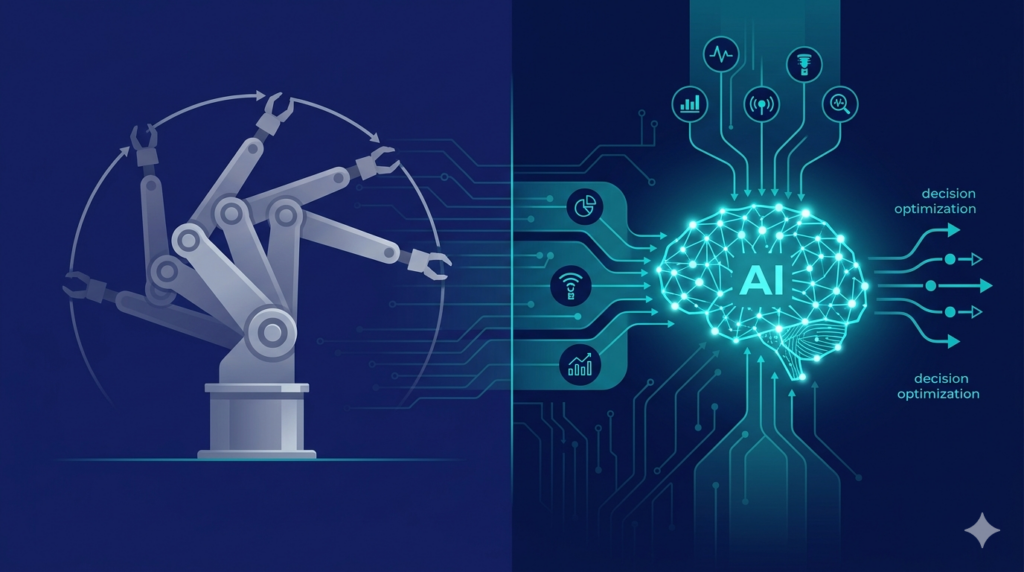
Traditional automation is a cooking robot that follows a fixed recipe. Press the button, and it makes ramen. Precise, sure — but if the noodles overcook or the pot boils over, it just keeps going exactly as programmed. Someone has to stand there and watch.
AI-driven operation is more like a chef with 30 years behind the stove. They read the flame, catch a smell, and think, “Hmm, something’s off with these noodles today.” They act before things go wrong.
So if traditional automation is about doing the assigned task quickly, AI operation is about judging and predicting on its own. That shift — from simple automation to intelligent, autonomous operation — is the whole point.
What Does AI Actually Do on the Floor?
Let’s skip the theory and look at what AI really does in practice.
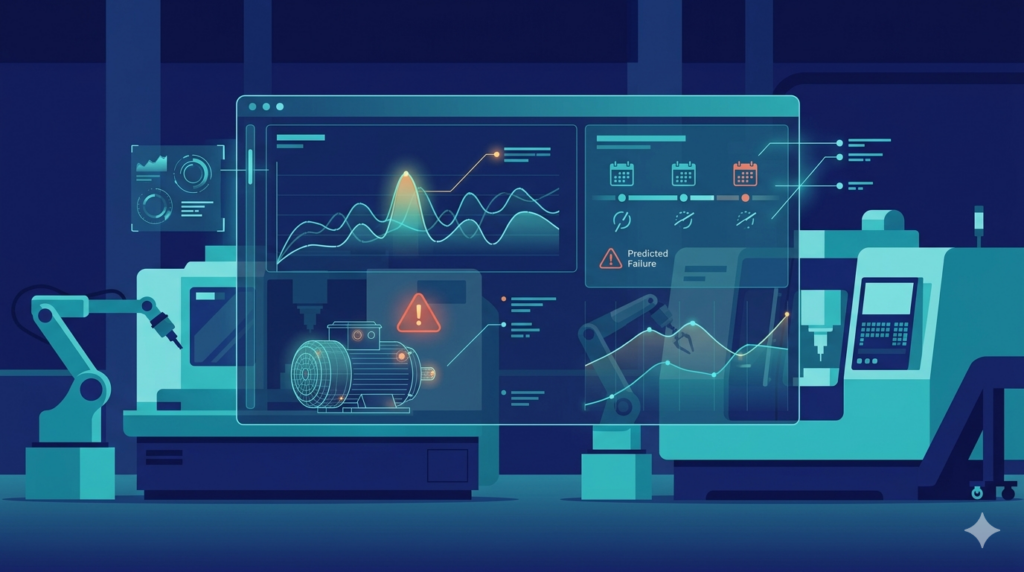
1. It warns you before things break (predictive maintenance) Just as people run a low fever or feel tired before getting sick, machines send out subtle signals before they fail — a slight change in vibration, a temperature creeping upward. AI catches these shifts in the data long before the human eye would. It tells you, “Replace this part within two weeks,” so you avoid the worst-case scenario of a line grinding to a halt out of nowhere.
2. It spots “something’s different” instantly (anomaly detection) AI learns what a machine’s normal looks like. The moment a pattern drifts even slightly from that baseline, it raises a flag. Think of it as a veteran operator’s gut instinct, rebuilt in data.
3. It cuts through alarm overload to find what matters On the floor, hundreds of alarms can go off in a single day. Most are trivial, which makes it dangerously easy for the truly critical signal to get buried. AI sorts and prioritizes them automatically, telling you, “Start with this one.”
4. It pushes quality and yield higher on its own Temperature, pressure, speed — AI fine-tunes countless process variables in real time to reduce defects and lift yield, the kind of constant adjustment that’s nearly impossible to do by hand.
But Where Does AI Get Its Data?
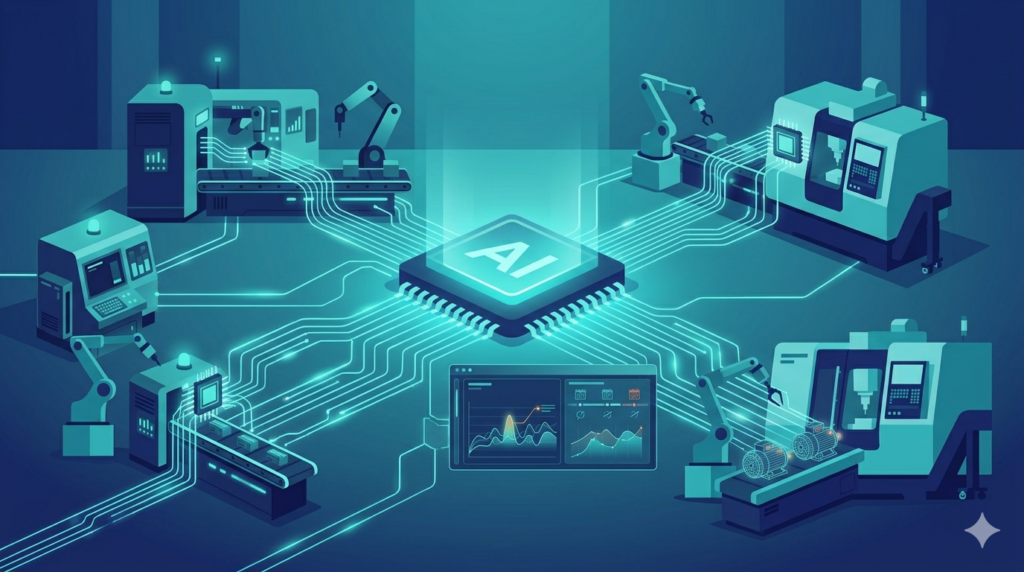
Good question. No matter how smart it is, AI can’t do a thing unless the equipment talks to it.
That’s where equipment communication standards come in — the agreed-upon “language” machines use to report their status (temperature, uptime, alarms, and so on).
There are many: SECS/GEM in semiconductors and displays, Modbus and OPC UA on the industrial floor, even Bluetooth and Wi-Fi for wireless setups.
Put simply, if AI is the ear, these standards are the mouth the machine speaks through. The mouth has to work before the ear can listen and make sense of anything. So the real starting point for equipment automation isn’t some flashy AI — it’s building a foundation that can understand every one of these scattered machine languages without missing a word.
So What Do You Actually Gain?
Here’s the short version:
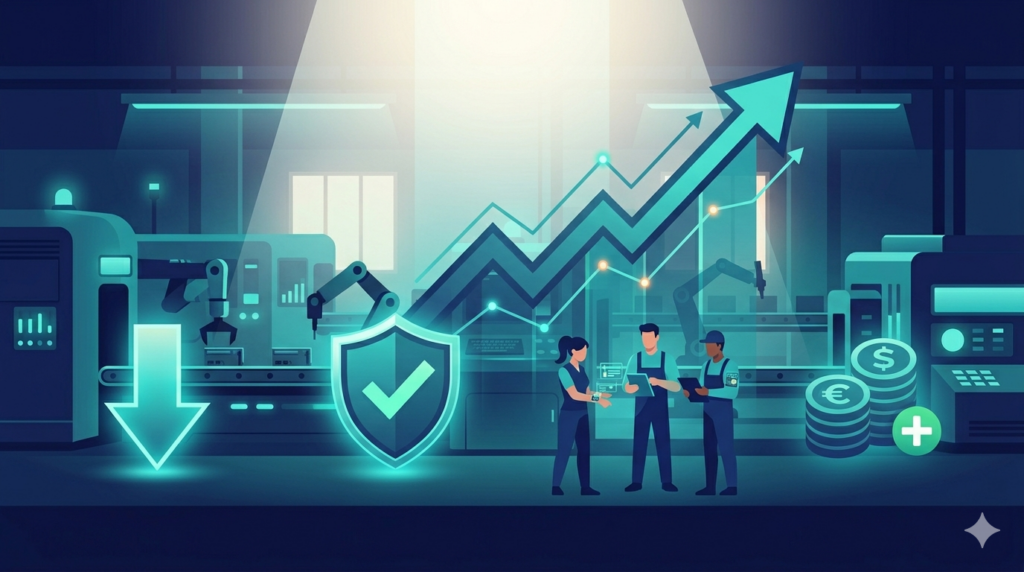
- Less downtime — far fewer sudden stoppages bringing the line to a halt.
- Steadier quality — consistent output instead of results that vary from person to person.
- A better-used workforce — people move off routine monitoring and onto the judgment calls that matter.
- Hidden savings — fewer defects, optimized energy use, and other losses you never used to see.
Okay — Where Do You Begin?
Most of the headaches in equipment operation trace back to the same root: manual and automated equipment are all mixed together, making management complex; output varies from worker to worker; and with too few people on hand, costs keep climbing.
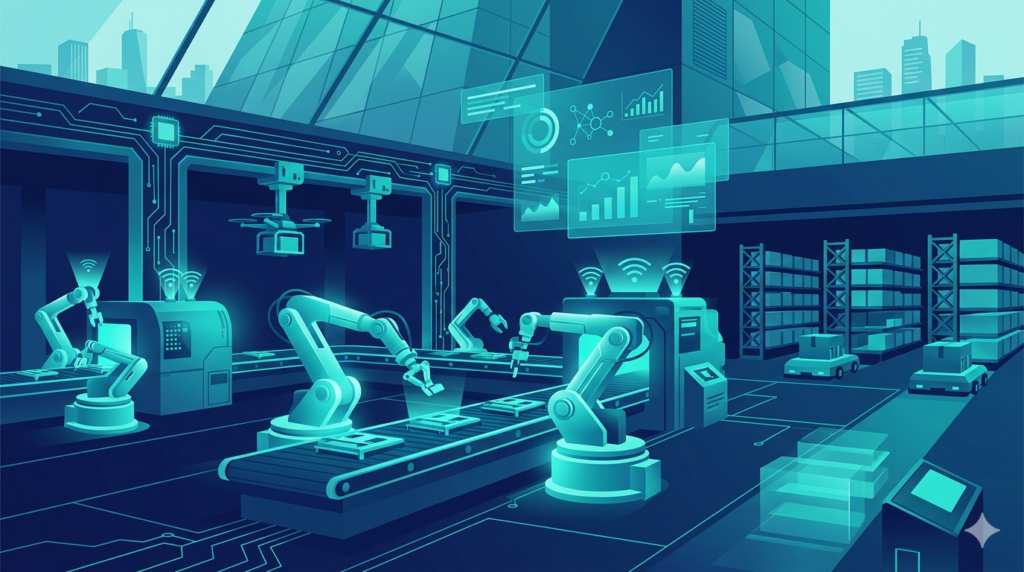
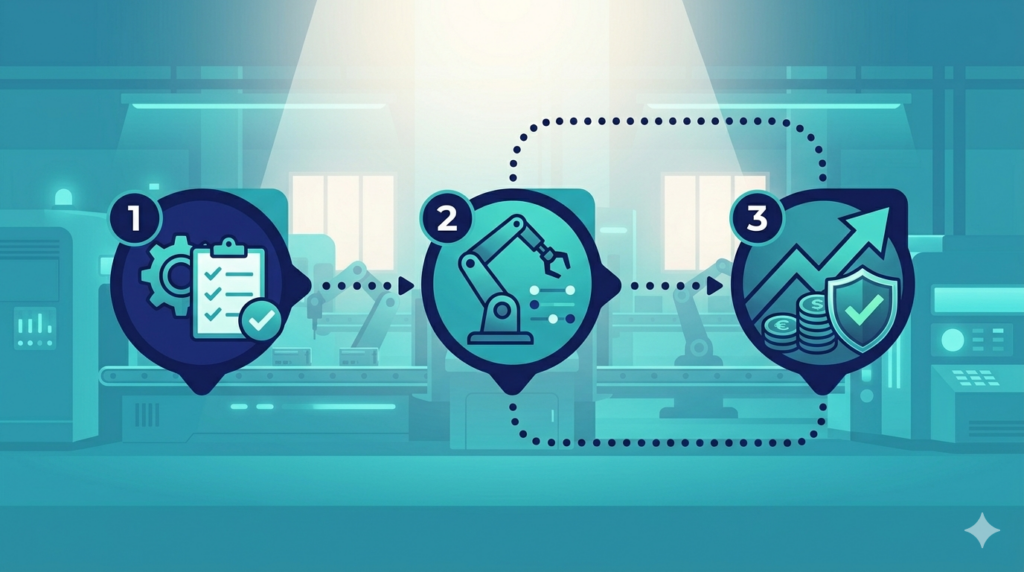
The key is to bring all that scattered equipment under automatic control and unified management. Here’s how it unfolds, step by step.
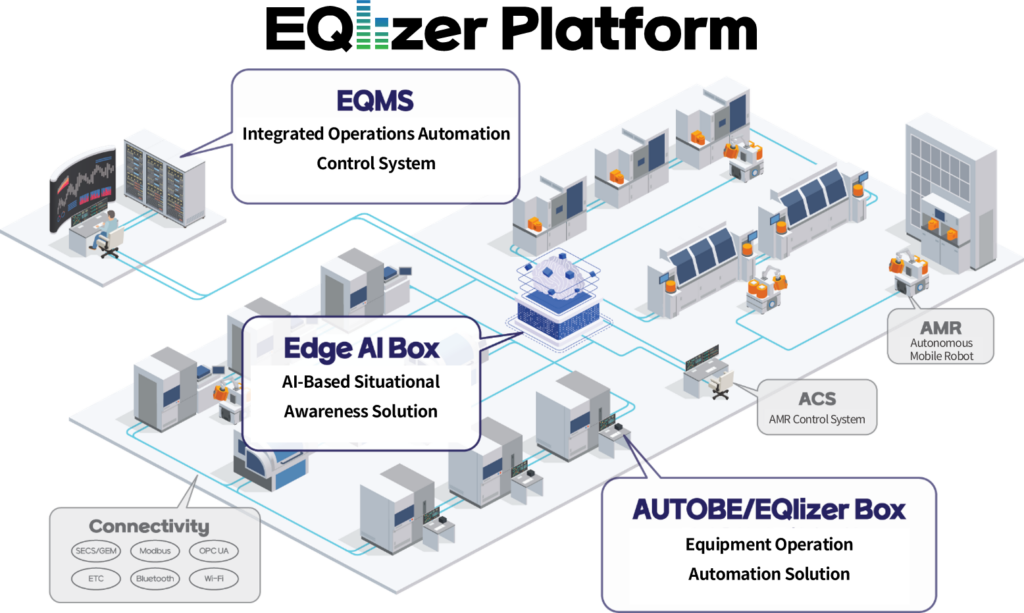
Step 1 — Bring scattered equipment under automatic control It all starts with getting machines to “talk.” Linkgenesis’s AUTOBE / EQlizer Box is an equipment automation solution that directly controls machines while exchanging real-time status and data. It supports a wide range of protocols — SECS/GEM, Modbus, OPC UA, Bluetooth, Wi-Fi — so it can bring even older legacy equipment into the fold without modifying the machines themselves. That’s exactly what “you don’t have to replace everything” means in practice.
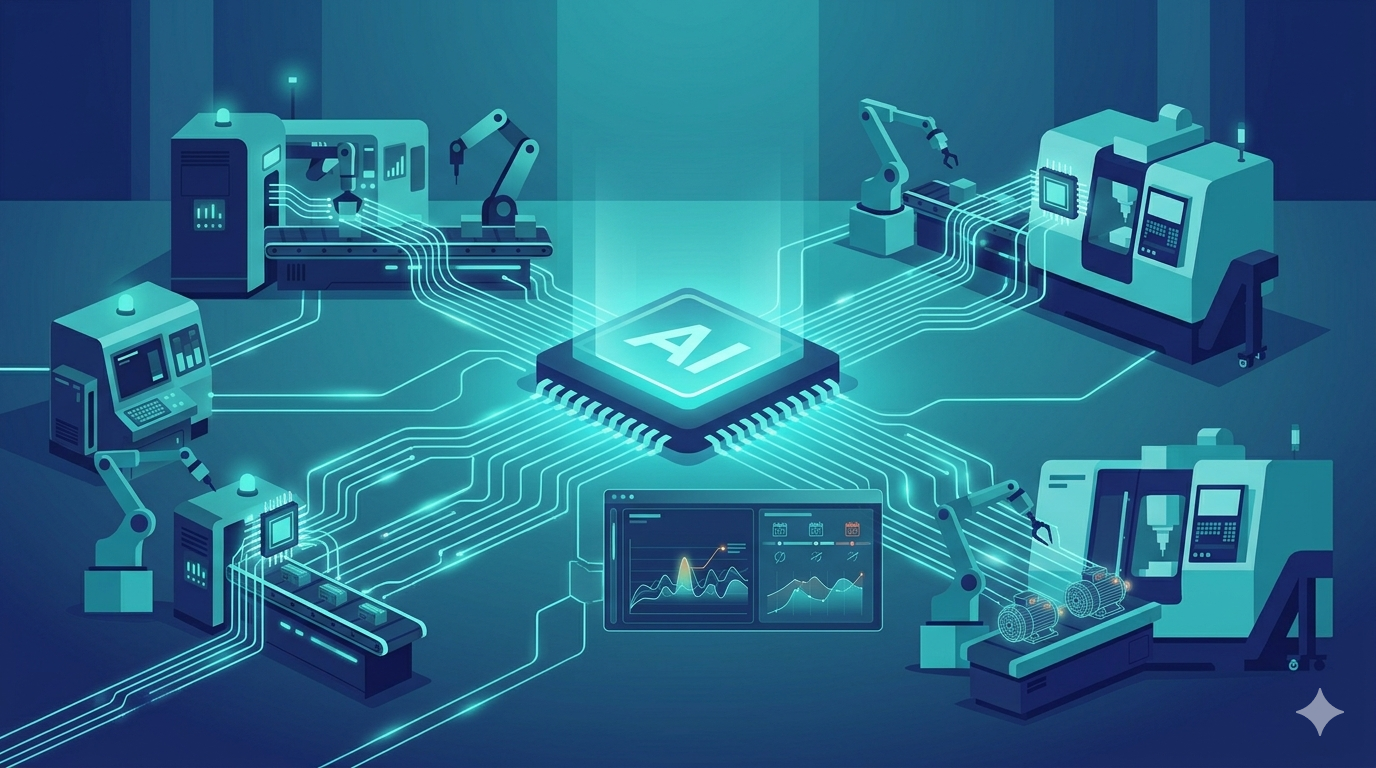
Step 2 — Let AI judge and act This is where the real intelligence kicks in. Edge AI Box analyzes the incoming data right on the floor, performing AI-based situational awareness and smart classification, then automatically carries out the appropriate response. This is the point where the predictive maintenance and anomaly detection we talked about earlier actually come to life.
Step 3 — Manage it all from one place Finally, the integrated control system EQMS collects and monitors equipment and sensor data in real time, giving you unified control and management of your entire automation setup from a single screen. This is the moment your scattered floor finally comes together as one.
And there’s more — automate your logistics too If you want to go beyond equipment operation and automate in-plant logistics as well, autonomous mobile robots (AMR) and the ACS system that controls them can take over the physical moving and hauling, too.
Three Things to Keep in Mind Before You Start
Finally, for anyone thinking, “So should we jump on this right now?” — a few practical pointers.
First, get your data right first. If the data is poor, even the best AI is useless. Collecting and standardizing data comes before deploying AI.
Second, don’t try to do it all at once. The proven path is to start small with one or two high-impact machines (a pilot), prove it out, and expand from there.
Third, don’t write off your legacy equipment. With the right integration layer, even older machines can produce plenty of usable data. You don’t need to buy everything new.
Beyond Automation, Into the Age of Autonomous Operation
The factory is evolving from a place that simply “runs automatically” into one that “thinks for itself as it operates.” The one keeping watch at 3 a.m. is no longer a worker fighting off sleep — it’s an AI that’s awake 24/7.
The question isn’t whether to do this, but how to begin. And that first step gets a lot lighter and surer when you take it with a partner who covers the whole journey on a single platform — from equipment control to AI judgment to integrated oversight.
All those manual machines scattered across your factory? Now’s the time to bring them under automatic control and unified management with the EQlizer Platform.